Our Design Tools
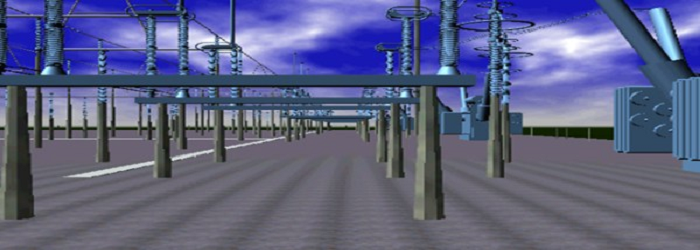
Paktim utilizes several software packages that increase quality and efficiency when it comes to power systems design. By having all substation components modelled to very tight tolerances in its database, engineers and designers can complete the substation physical design much faster than by hand. The software then runs clash tests to check all clearances, produces a bill of material to be used for procurement, and cuts all of the two dimensional drawings in the format used by the client.
In addition to improving the accuracy of the initial design, the software allows customer changes to be handled much more expeditiously, since only the model needs to be updated for revised drawings to be generated. The client can also view the model and its underlying layers, providing customer personnel with the ability to see the substation prior to its construction.
Our modelling software also produces intelligent schematics for protective relay panels. The wiring diagrams to be submitted to panel manufacturers are automatically produced from both the schematics and the customized criteria input to the system. Transmission line design software works in conjunction with Pro E software to depict the details of a client's actual project location.
PDMS
Paktim uses WinIGS to conduct ground grid analysis. This program allows the design engineer to import the physical substation model from the 3-D software and calculate the ground potential rise at any point in the station to ensure step and touch potentials are safe for personnel.

WinIGS
This program is also used to verify ground grid impedance using a Smart Ground Meter (SGM). In the field the SGM is connected to a laptop computer, and as measurements are taken, the WinSGM program performs a statistical analysis on the measured data to determine its validity.

Transmission and Distribution Line Design
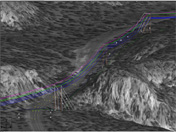
Paktim uses PLS-CADD, a powerful and comprehensive program for structural and geometric design of overhead lines. This 3-D software integrates in a seamless environment all aspects of transmission line design, including 3-D Terrain modelling and rendering; route selection; sag-tension calculations; minimum clearance and strength checks.